In 1991, India flew its gold abroad to raise $600 million. In 2026, the world's biggest tech companies are pledging tens of billions to build here. What changed?
Two moments, 35 years apart. Both are about money crossing India's borders.
In the first, money was leaving, and India was running out of time.
In the second, money is arriving, and everyone wants a seat at the table.
The question is who actually comes out ahead.
$600M
What the RBI raised in May 1991 by airlifting 47 tonnes of gold to the Bank of England and 20 tonnes to UBS, according to Wikipedia's account of the 1991 crisis.
1991: the gold on the plane
In January 1991, India's foreign exchange reserves stood at about $1.2 billion. Within months, they were barely enough to cover around three weeks of essential imports.
So the Reserve Bank did something that still sounds unreal. Between 21 and 31 May 1991, it flew 67 tonnes of gold out of the country on chartered planes.
The gold left so India could raise cash. It bought the country time.
Fast forward. In the week ended 9 October 2026, India's reserves stood at $726.03 billion, Deccan Herald reported.
That is the backdrop for the AI story.
2025-26: the money comes in
In October 2025, Google said it would spend $15 billion over five years in India, including its first AI hub in Visakhapatnam.
On 9 December 2025, Microsoft announced $17.5 billion for India's cloud and AI infrastructure over four years.
A day later, Amazon said it would invest an additional $35 billion in India by 2030, taking its planned total to about $75 billion, TechCrunch reported.
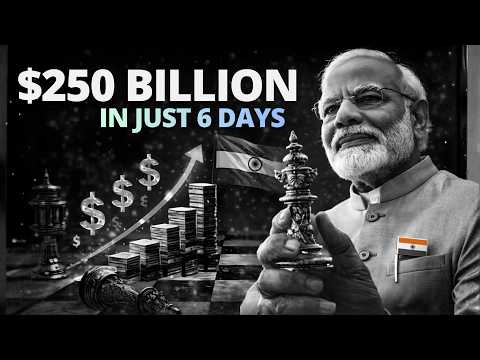
Then came the India AI Impact Summit in New Delhi, which ended on 21 February 2026. IT Minister Ashwini Vaishnaw said it drew more than $250 billion in infrastructure investment commitments.
By 20 February, 70 countries had signed the Delhi Declaration, and more than 500,000 visitors had attended, according to Business Today.
In 1991, India had to prove it could pay. In 2026, the world is paying to be in India.
Why the world is betting on India
Big tech does not pledge this kind of money out of goodwill. It wants data centres close to users, a huge pool of engineers, and a market that is still growing.
India offers all three. It also offers something harder to price: a government that wants AI to be a national project.
But a pledge is not a payment. Commitments announced at summits are spread over years, and the fine print matters.
Who owns the data centres? Who owns the models running on them? And where do the profits go?
$250B
Infrastructure investment commitments IT Minister Ashwini Vaishnaw said the India AI Impact Summit drew, according to Business Today (20 February 2026).
The part we saved for the video
The headlines say India is winning the AI race. The video asks a sharper question: when all this money lands, who actually wins?
We break down the power, money and strategy behind the summit, and what it means for Indian students and young professionals looking for their place in it.
- Who really captures the value from big tech's India investments
- The difference between a pledge and money on the ground
- Where Indian students and young professionals fit in this bet
Watch the full story
Who actually wins India's AI bet?
See the strategy behind the billions, and where you fit in it.
Watch on YouTubeYour turn: Is foreign big tech building India's AI future, or building its own future in India? Tell us in the YouTube comments.


