The rupee has lost more than 5% to the dollar in 2026 alone. Is India just watching, or is something bigger being built behind the scenes?
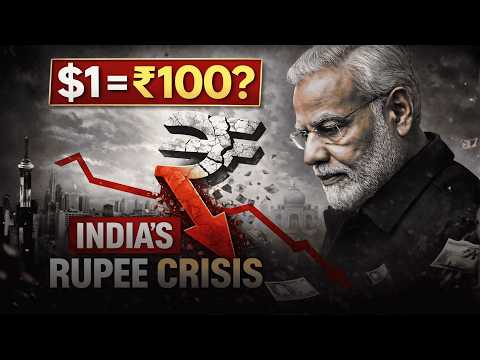
On 31 December 2025, one US dollar cost ₹89.88. By mid-October 2026, it cost around ₹95.
That's a fall of more than 5% in under ten months. If you're paying a foreign university fee, buying a phone, or filling up a tank, you've already felt it.
So why does the rupee keep sliding? And why does the dollar keep winning, no matter who is in the White House?
89%
The share of all global foreign-exchange trades with the US dollar on one side in April 2025, according to the BIS Triennial Survey.
Why the dollar always wins
Start with the number above. Global currency markets traded $9.6 trillion a day in April 2025, says the Bank for International Settlements. In 89% of those trades, the dollar was involved.
The euro, in second place, showed up in just 28.9%.
That gap is the whole story of dollar power. Oil is priced in dollars. Most trade is invoiced in dollars. Central banks hold dollars as reserves. So when the world gets nervous, money runs to the dollar, and currencies like the rupee get weaker.
India imports most of its crude oil. Every barrel has to be paid for in dollars. So the demand for dollars inside India never really switches off.
That raises a hard question. Can a country this size really reduce its dependence on someone else's currency?
The rupee's quiet counter-move
India has been trying, quietly, for a few years now.
On 11 July 2022, the RBI issued a circular that allowed exports and imports to be invoiced, paid and settled in rupees. Banks could open "Special Rupee Vostro Accounts" for banks from partner countries. An Indian importer pays in rupees, and the money lands in that foreign bank's rupee account. No dollar in the middle.
Then came UPI. The payment system that changed how India pays for chai now works abroad too. According to Business Today, UPI is live in nine countries, including Bhutan, Singapore, France, Mauritius, Nepal, Sri Lanka, the UAE, Qatar and Cambodia.
On paper, these look like small plumbing changes. But plumbing decides where money flows.
The rupee doesn't need to beat the dollar. It needs to stop needing it for everything.
Why a weak rupee hits your wallet
A falling rupee is not all bad news. Exporters, IT firms and families receiving money from abroad get more rupees for every dollar.
But for most young Indians, it shows up as cost. Imported electronics get pricier. Studying abroad gets more expensive. Fuel prices face pressure because crude is bought in dollars.
The RBI has been stepping in. In October 2026, reports noted fresh RBI curbs on speculative forex derivative bets against the rupee. The rupee had settled at 95.16 on 14 October before recovering a little the next morning.
Still, intervention buys time. It doesn't change the 89% number. So what is India's longer plan?
95.16
Rupees per US dollar at the close on 14 October 2026, up from 89.88 at the end of 2025, according to IANS and Outlook Business reports.
The part we saved for the video
Rupee trade settlement and UPI abroad are the parts you can see. The video goes into what India is doing behind the scenes, the moves that don't make headlines but could matter far more over the next decade.
It also answers the question most people get wrong: is a weaker rupee a sign of failure, or part of a strategy?
- The behind-the-scenes plan India is building to reduce its dollar dependence.
- Why some countries have already said yes to it, and why others are holding back.
- What has to go right for the rupee to become a currency the world actually wants.
Watch the full story
India's quiet plan for the rupee
Find out what India is building to loosen the dollar's grip, and whether it can work.
Watch on YouTubeYour turn: Should India push for rupee trade even if it means a weaker rupee in the short run? Tell us in the YouTube comments.


